
Introduction
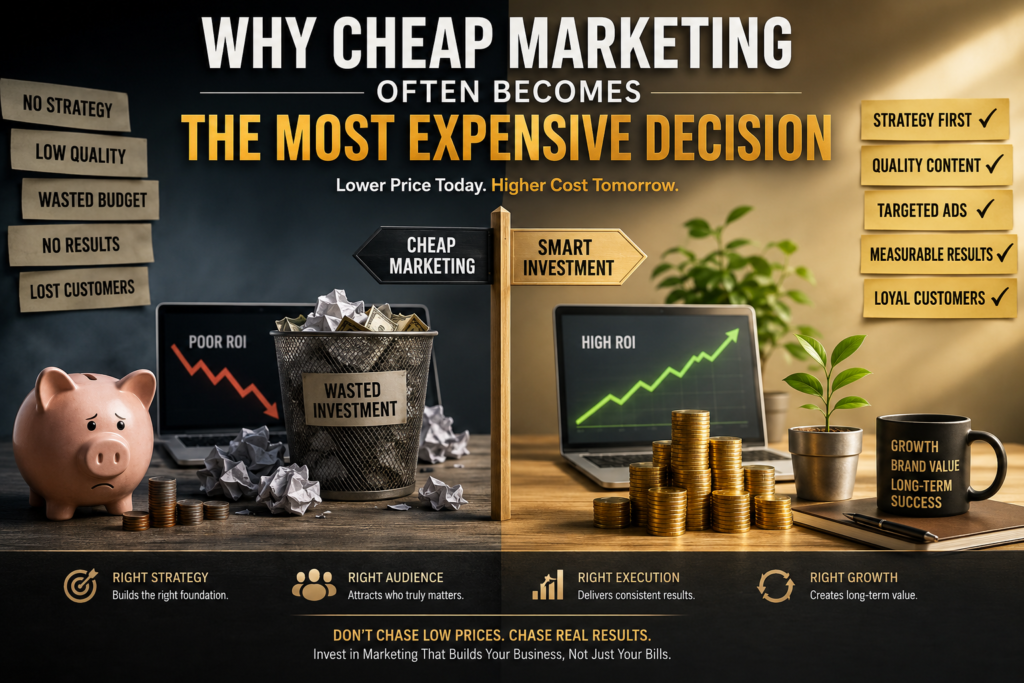
Open with a familiar scenario: a business chooses the lowest-priced marketing package to save money, only to spend far more later fixing poor branding, ineffective ads, and lost opportunities. Introduce the central idea that the true cost of marketing isn’t what you pay an agency it’s what you lose when marketing fails.
The Illusion of Saving Money
Discuss why low prices are so attractive, especially for startups and small businesses operating with tight budgets. Explain that marketing is often viewed as a cost rather than an investment, leading decision-makers to prioritise affordability over capability.
The Hidden Costs Nobody Talks About
Explore how poor marketing creates invisible expenses. Weak branding erodes trust, low-quality content damages credibility, badly managed advertising burns budgets, and an underperforming website quietly loses potential customers. These losses rarely appear on a financial statement, but they directly affect revenue.
Cheap Marketing Rarely Starts with Strategy
Explain that many low-cost providers focus on deliverables—social media posts, reels, or ad campaigns—without first understanding the business. Effective marketing begins with research, customer insights, competitor analysis, and clear objectives. Without strategy, execution becomes guesswork.
The Price of Inconsistency
Describe how businesses frequently switch agencies because they’re dissatisfied with results. Each transition means restarting campaigns, rebuilding brand consistency, retraining teams, and losing valuable momentum. Over time, these interruptions cost far more than investing in quality from the beginning.
When Low Prices Mean High Opportunity Costs
Introduce the concept of opportunity cost. Every month spent with ineffective marketing is a month competitors strengthen their search rankings, build customer loyalty, and capture market share. The biggest loss isn’t the agency fee—it’s the business that never arrives.
Why Great Marketing Costs More And Why That’s Okay
Discuss the real components of professional marketing: experienced strategists, designers, copywriters, media buyers, SEO specialists, analysts, premium tools, testing, and ongoing optimisation. These resources require investment, but they also produce more sustainable outcomes.
Value Over Price
Encourage readers to evaluate agencies based on business impact rather than monthly retainers. A higher-priced agency that consistently generates qualified leads, improves conversion rates, and builds long-term brand equity often delivers a far greater return than the cheapest alternative.
How to Evaluate a Marketing Agency
Instead of asking, “How much do you charge?” suggest more meaningful questions:
- How do you measure success?
- What industries have you worked with?
- How do you approach strategy?
- What reporting will I receive?
- How do you improve campaigns over time?
These questions reveal far more about an agency’s capabilities than its pricing alone.
Conclusion
End by reinforcing the article’s central message: the cheapest marketing option can become the most expensive when it sacrifices strategy, quality, and measurable outcomes. In today’s competitive digital landscape, businesses should view marketing as a long-term investment in growth rather than a short-term expense to minimise.